Monday, 18 November 2013

Grown-up Gap Year

Why Should Kids Get All The Fun?

Many of us parents now find ourselves talking to teenage kids about what they will do on their gap year. So excited was my youngest daughter at 13, to see my son and I set off to cycle across the world, that she immediately began planning her own pre-university adventure. I began to take notice; and there was no doubt about it, the majority of teenagers now seem to see it as an issue of not if they will have a gap year, but when - perhaps along with who will pay for it. For many it comes a close second to completing a university entrance form (UCAS in the UK). I don't begrudge them that. I do believe that a gap year can be a valuable part of a young person's education – learning the stuff they don't teach you in school. Useful stuff like how other people live and how lucky we are to have what we have, learning how to speak other languages or even how to better communicate with people who do speak our own tongue. They can learn a lot. I'm often surprised by how many young people don't know where other countries are in the world or what kinds of people live there. I particularly think it valuable for them to find themselves in situations where they are developing skills for getting out of trouble and learning how to avoid it – learning how to seek out a bargain or the best quality in things with limited funds, or learning the value of a good pair of boots, a comfortable bed and a wholesome meal. Why kids don't learn most of these things at school or at home anymore I don't know, but I won't get going on that one.


So basically then, a gap year is a great idea, even if you can't get your parents to pay for it and even if it has to involve work. Actually I think it can often be better that way - especially as this means a lot to a future employer. But what about those of us who left school before gap years were thought of? Well in fact there were gap years for the well-off as far back as the turn of the 19th century and even before – it was know as The Grand Tour – but I doubt anyone reading this will be that old. And this was my feeling when my kids started to talk about gap years, "I wouldn't have minded having one of those myself!"

Grown-up Gap Years?
So why not? Sure it's great if you can go off and learn about the world before you embark upon your adult life. There's no doubt in my mind that travel or working abroad will make a young person far more employable in the world of work, and far better parents too when the time comes. But that is not to say that this is the only way. There are a great many reasons for taking an extended break from work later on in life. Here are a few:

1. You didn't get one when you finished school so you feel you missed out, compared to others.

2. Your experience of the world is limited so you feel unable to share conversations with friends or your own children and grandchildren.

3. You are bored with the same old living and working environments.

4. You are stressed after years of work and have seen others getting sick from overwork.

5. You need fresh impetus in your life - both privately and in your work. A fresh look at things. An extended trip away might help you to find a new direction.

6. Your job has ended and you don't know what to do next. You need to clear your head – look at things from a distance.

7. You have retired and you want to catch up on things you've missed out on.

8. You find yourself single again and want to meet some different people in new environments that might spark unexpected friendships, or even a romance.

9. You are tired of short, expensive package holidays and want to go overland travelling, like you did when you were young. Backpacking and staying in hostels.

10. You want to have some adventures before it's too late. Before you are too old or unfit to enjoy it.

I did not necessarily think I needed an adult gap year. At 42 I had been running my own successful consultancy business for 3 years. Before that I had had several careers and had lived in many other countries. I had taken lots of breaks from work to go overland travelling before my children were born, so I did not feel deprived. But I was working too hard. My eldest daughter was 13. My son was 10yrs old and they were just getting to the age where we could go off on little adventures together – cycling, hiking and camping, mainly. It was after my first cycle / camping trip with my 10yr old son Sam, one freezing English December, that he asked me if I would take a year off work when he finished school.
"What for?" I asked him.
"Well, I wondered if you'd cycle to Japan with me," he replied, nonchalantly.
8 years later we set off. But not before I had gone through a good deal of worry, trying to find someone to run my business while I was away.


As I have said, I did not need a gap year in the same way that other parents undoubtedly do. Or at least I didn't think I did. But the truth was I was overworked. Stressed. I had begun to focus only on work, with my family-life coming a poor second. I was there to provide for my family, I told myself. Someone had to pay for it all! But what I discovered over the next eight years, while I prepared for that gap year (actually I only started taking it seriously as a prospect about three years before we went), was that my family didn't want me to work so hard. My kids just wanted more time with me. My wife too, I think. She certainly didn't want to see me get a heart attack – and that was probably the way I was heading. So as I said, finding someone to run my business was a tough challenge just in order to escort Sam on a cycle trip from Ireland to Japan, but once we set off I realised something important. I didn't care about not earning so much money for a year. I didn't even care if I came home to find my business had folded - in fact once we set off I was able to see the whole exercise as a potential business exit plan. I had enough money for the trip and an adequate house. Why did I need more? My wife told me I should become a sculptor upon my return, since that is what I loved doing. But the absence of phone calls once we set off; the letters on the mat, bills, toilet cisterns needing mending or light bulbs changing – that was a revelation. I felt free in a way I almost never had. Not as an adult anyway. I felt reborn and I had hardly even been away for three days!


Why had I not done this before, I asked myself? I think because it never seemed possible. Too expensive. Too much time away. Perhaps it would have seemed irresponsible? My wife had certainly helped by telling me it was okay to do it. Good to do it, in fact. "You're allowed to enjoy it," she said.
But in the main, it happened because my son asked me to do it. Looking back, I can see that otherwise I probably would not have taken a break at all. Most likely I'd have kept driving myself to make my business evermore profitable, until I got sick or had an accident. Then I would have taken a break. Except I would probably never have been able to cycle 10,000 gruelling miles with an 18yr old. Not after a heart attack or cancer. No, I have my son to thank for my health, my peace of mind and the improved life that followed.

Incidentally, I did not come home to find my business had folded. I found my new business partner had increased business by 45%. He told me he was happy continuing to run it, largely without me. As a result I sat down to with my son to write a book about our experience (more about the trip and the book on my cycle travel blog) which subsequently became an Amazon bestseller. I never imagined myself becoming a writer or giving motivational talks to businesspeople, but I can see now that this was my destiny. It's a life that fits me well, but I would probably never have achieved it if I had resisted taking those ten months off work to go with my son on his gap year. You will be unsurprised to hear that the trip did wonders for our father-son relationship (an issue covered in the book).

Video of us cycling through 'The High Range of Travancore,' Munar, India. Click arrow.

My adult gap year was an adventurous trip, covering 10,000miles from the west coast of Ireland, across Europe, through Turkey, Iran, India, Thailand, Cambodia, Laos, Vietnam, China and Korea and finally ending in Tokyo. Of course not all gap year trips need to be this way. I had an older friend in Japan who I taught English to when I was 25. He was a senior manager of a major Japanese trading company – an important and well paid job, but one he found rather mundane. Outside of work he had an interest in wild flowers and also watercolour painting. When he retired, he took a trip to a number of countries – Indonesia, Malaysia, Australia and China – seeking out unusual indigenous wild flowers and painting them. This eventually brought him to the attention of an international botanical society who asked him to submit some of his watercolours. Over time it led to his becoming an honorary fellow of the society, giving talks all over the world. He had never imagined he could do such a thing. Unfortunately he died a couple of years ago. He told me he felt fulfilled by his post-retirement activities but wished he might have taken that first trip when he was a little younger. Who knows how that might have changed his life?

To find out more about my adult gap year and the resulting book, "Long Road Hard Lessons," can I suggest you have a look at the other posts on the travel blog (as well as on this Author blog), where you will find links to my books on Amazon etc. Thanks for reading – and please remember to make the most of your life.

For the bestselling travel book 'Long Road, Hard Lessons' by Mark Swain, you can find this along with his two collections of short stories on Amazon, Smashwords etc. 
In the UK his books can also be found in all Waterstones Bookstores.

Monday, 14 October 2013

Stories On My Doorstep

Dustbin Men - More Short Story Inspiration

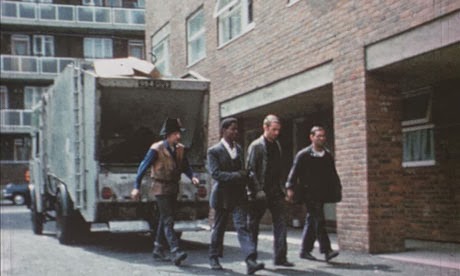
Two weeks ago I wrote a blog post about memory and how sounds, smells and images can spark them. The post was called 'The Spark That Ignites The Memory' and a lot of people commented on it. Several readers were particularly taken with the example of the milkman and the sound that sparks the memory of what was once a trademark sound of early morning in Great Britain. 'The chink of bottles somewhere in the early morning traffic haze,' as I put it in one of my early flash stories. One of these readers was my cousin. She commented that it would be nice if I wrote something about Dustbin Men. I told her she had won this week's 'Request a Blog-post Competition,' and that I would write it this week. So here it is:


Although milk delivery has severely declined in Great Britain since I was a boy, household waste collection to the doorstep is still currently alive and well. Recycling has perhaps made the job more complicated and outsourcing perhaps has made it more of a casual labour affair, but they are still there in one form or another, making a racket in the street. I find it reassuring – heartwarming in fact. These doorstep public services provide a sense of community that is in danger of disappearing. The daily visit of the postman or post-lady is a longed-for pick-me-up for many elderly and lonely people. Their one chance to see a friendly face every morning and to exchange a few words. Yes a few words.


I am not a lonely person. Neither am I old, but I often exchange a few words with our post-lady. Her name is Mandy. She has the happiest face and the cheeriest of dispositions. She's very energetic and wears shorts in summer – a little distracting for some customers, but only in a positive sense. Once or twice I have got her to slow down and chat on the doorstep for a couple of minutes. I asked her about her job.
"I had a friend when I was younger who got a job as a postman," I said. "It was less money than he'd been earning on a factory production line, he told me, but he didn't care. He absolutely loved it. He loved chatting to old ladies and popping in for cups of tea and biscuits. Their stories and their news. He loved helping people out – reaching things off a kitchen shelf for them or opening a stiff jar, and he loved being finished early when other people were only just at work."

"Oh those days have long gone," Mandy said. "They time us now, you know. We can't stop and chat, and as for going in for tea – forget it! It would be impossible. Once we've finished our round we have to go to the sorting office and work the rest of our shift there."

I told her I thought this was very sad. Not just for her. The community was biggest the loser. Especially the old and lonely or people struggling with problems and nobody to tell. In the past the Postie was the person who would notice a vulnerable person with a problem and alert a neighbour, their family or Social Services. I am in no doubt, a valuable service has been lost; not to mention the loss of job satisfaction and the people who left the job because of that change. How unbelievably stupid of us to allow this to happen.

In an effort to salvage something from these lost times perhaps, I often use scenarios surrounding these public service workers as inspiration for short stories. I only need to think of a postman delivering mail to spark memories and very soon I have a story. You can find a story featuring a post-lady in my book "Special Treatment and Other Stories." It's called Topolino and is about a man paralysed by a construction site fall, who is constantly trying to chat-up his pretty post lady, and yes, the post-lady is inspired by Mandy.

Image courtesy of www.thedailymail.co.uk

Dustbin men never had time to call in for a cup of tea in my recollection. They were always in a rush. But they were a part of that same community of essential workers. In the past, like postmen, someone might have remained a dustman all their working life – Eliza's father in the film version of My Fair Lady, comes to mind. They would have been known by most of the local people on their round. They were public servants, doing a job that most of us would not be prepared to do and for that they were afforded a certain amount of respect. These days the job tends to be done by contract workers; often recent immigrants who can't find other work and who leave when they find a more pleasant job. Local people don't know who they are. Invariably they are just people to complain about for leaving a mess. For these reasons they mostly have little pride in their work. My cousin has a vivid memory of the dustmen of old, and it is a memory shared by me.


I lived in various places around the world as a child and would come home to the seaside town of Folkestone in Kent for holidays. It was my father's home town so many of my relatives lived there. One Christmas in heavy snow, I was playing at my cousin Pamela's house. I was around ten years old and she seven, I think. I was a bit of an adventurer (troublemaker). We asked her mum (my aunt) if we could go out to play in the snow. We put on gloves, coats and boots and went into the garden. A snowball fight began. Pamela was tough and determined for a little girl but I felt unkind using her for target practice. I was looking around for something else to aim at when we noticed the dustcart coming along Brockman Road. Quickly I encouraged Pam to help make an arsenal of snowballs and line them up behind the wall. By the time the dustcart reached her house we must have had thirty or more. As the dustmen slithered about on the icy pavements with the old-fashioned metal dustbins on their shoulders, they were suddenly assailed by well aimed snowballs, causing one or two of them to drop their bins, spilling all manner of disgusting garbage over themselves and the street. It didn't take the dustmen long to work out what was happening. Leaving their work, they formed a small attack force and rushed the garden, flushing us out from behind the wall.


Climbing over the back wall and escaping into a neighbour's garden, the two of us frantically set about making more snowballs.
"If we go through to the front of this house, we'll be able to surprise them when they come into that next street," I said.
Hearing the large dustcart rounding the corner, we poked our heads above the front hedge. There they were with their heavy leather jerkins, (most binmen wore them) bins on shoulders, faces red with the cold and a previous pelting. We waited until the right moment, when they were in close range. All of a sudden the men were startled by the animal screams of two small children armed with a dozen hard packed snowballs, pelting them for all they were worth then scarpering to safety over the back wall. The dustmen re-grouped and began to give chase, hurling their own snowballs in reply and calling out after us.
"We'll get yer, you little buggers!"
Women came out of the houses to see what was going on.
"Make them clean up the bloomin' mess too when you catch 'em!" shouted one of the women.

Image courtesy of lonniebruhn.com

All along the street and into several neighbouring streets these guerrilla tactics were followed. The dustmen suffered badly but never gave up. They were a match for us and hungry for the fight. Chaos reigned and bins in vulnerable areas were left unemptied. Customers became angry and joined the dustmen in trying to catch us, sure that we must be part of a large gang of troublesome youths.

"Maybe we should go home now?" said Pamela, cold and becoming fearful of the consequences.
"What! Just when we have them on the run – you must be joking?" I insisted.

Pamela was easily encouraged to continue. However, I should have got followed her instincts and got out while the going was good. As the battle progressed, the dustmen's tactics improved and they began to anticipate our sorties. Soon we found ourselves being the ones bombarded with snowballs and before long we accepted that we should retreat and live to fight another day. Arriving breathless and battered into my aunt's kitchen she asked what had been happening. Fortunately my aunt had a good sense of fun, especially where children were concerned.

"We attacked the dustmen with snowballs," we said.
"Right the way down to Victoria Grove," I said. "They were fighting back but we beat them, just Pam and me!"
My aunt smiled, before attempting a more serious face.
"But you'll get me into terrible trouble, you little monkeys! Those men have a job to do. If people's bins don't get emptied on time, who's doorstep are they going to come complaining to? You'd better get out of those clothes before the policemen arrive, otherwise they'll know it was you!"


She seemed serious. Quickly we got out of the wet clothes, boots and coats and went to play in the living room. It was about twenty minutes later when we heard the dustcart coming back along the road. Sure that they would not now recognise us, Pam and I went out into the garden to watch them sweep up what they had dropped during the initial attack. They recognised us immediately.

"Hah, we won in the end didn't we, you little buggers," they laughed.

We stood there open mouthed. Astounded to see them waving kindly to us from the back of the dustcart as they drove off.
Ah, they don't make dustmen like that anymore!

The book 'Special Treatment & Other Stories', including the Kinglake Short Story Prizewinning title story, is available via amazon.
Link: amazon.co.uk
Link: amazon.com 

Monday, 7 October 2013

The Travelling Storyteller

On The Road Again – A Message To My Children

I knew a boy who was from birth, lured by a life on the open road. Some of his first memories (at around 3 years old) were of sitting at his bedroom window looking out at the big wide world and planning his escape from the confines of home. Some days his mother would see him in the garden with his fingers clinging to the fence, looking. I hear she came out once and asked him what he was looking at.

"When will I be big enough to go, Mummy?" he asked her.


It was not that he was unhappy with his family. He loved them, and they him. In fact I think it was feeling so secure about home and family that gave him the confidence that he could leave it. And it was not long before he did. Much to his parents' horror, some months before his fourth birthday he set out. He had worked out how to get over the tall side gate to the house. Heart racing with excitement, he headed off up the hill with a chocolate spread sandwich and an piece of cheese wrapped in a handkerchief on a stick, just like the one he had seen in a storybook. He was not sure where he was going – just out there. After about a mile he had the idea of visiting his grandmother to tell her about the adventure upon which he was embarking. She had a great sense of adventure too and would surely not tell him off. She was pleased to see him and after about half an hour, was careful not to let him see her telephone his mother. Just as he was saying that he needed to continue on his travels, his mother arrived in a frantic state. The boy's journey was cut short and he was severely warned about the dangers of being out on his own along busy main roads at only three years old. The mother, of course, did not understand that her son was completely safe and capable. He had been planning the trip for some time.


As time progressed, the boy continued to escape - small sojourns that were a practice for the big escape. The gate having been extended in height, he resorted to crawling under the hedge. There was no holding him. The parents wondered what kind of child they had produced. Soon the boy discovered atlases, maps and children's encyclopaedias. He began listening intently to radio and television programs, learning about places he could travel to. Lying awake thinking about them at night. More thought was given to the things he needed with him and he packed a secret running-away bag. A small duffle bag. It had a front zip pocket, into which he put the odd few coins he found lying around the house. Generally when he ran away, his mother had a good idea where to look. He would usually call into the corner shop, where he was popular with the three elderly sisters who ran the place. His mother would call there first to confirm his route and time of escape. Then she would try the swings and slide at the park. If he was not there she would try his grandmother's house and after that a petrol station and car repair depot on the outskirts of town, on the London road. This was about two miles away. At three or four it was usually as far as he could get in the time before she noticed him missing from his bedroom or the garden and caught up with him. Being unable to drive in those days, this provided his mother with a good deal of exercise as well as worry. No amount of warnings would deter him. Even when told of a little girl of eight along the road, who had been killed by a lorry when sent to the greengrocers by her father, he felt not the slightest hesitation about escaping again. It was his destiny.

It may also have been destiny that protected this little boy from the perils of the road. Some would say it was simply good luck. He himself believed it was due to his careful attention to detail. He remained convinced throughout his early years that a small child could learn to be as effective as an adult at getting about safely. Nothing his parents did or said would deter him from this view or from continuing to escape from home and in the end they came to accept it as something they could not change. They bore it as an affliction, you see; regarding themselves as parents with a problem child. A 'disturbed' child, perhaps.

Eventually, after continuing to cause havoc and worry within his family, the boy reached adulthood. Free to make his own choices in life, he took time away from higher education, and then from work, to hitch-hike around his native England, before venturing further afield into Europe and then on to India and North Africa. Years of his life were spent in happy wandering through new and fascinating countries, meeting local people and sleeping under hedgerows, on beaches or in haystacks. He loved this life and put study and career ideas to one side for a number of years, in order to travel further. People he met on his travels and his friends and family back in England alike, loved to hear the stories he told of his adventures. They told him how they envied him his life, but could not bring themselves to join him on the road, for they were busy climbing the ladder.


Although the young man loved his wandering life, he knew deep inside that one day he might meet someone who would make him want to give it up, and one day that event came about. Returning from the Orient with a beautiful young woman, the young man soon channelled his sense of adventure into life with a young family, albeit taking his family during his children's early years to live in some of the countries that he had previously come to know during his travels. His children seem to delight in the stories he told them at bedtime or on long car journeys.

In middle-age, drawing upon his experience of life and people, the young man set up a business that became a big success. He became wealthy and comfortable, although he never forgot the simple things he felt were most valuable in life. As the man's children grew, they developed a similar longing for the adventure of travel. As teenagers they sometimes asked him to take them on wandering journeys on the road, but he was too busy with work. At the same time he began to find his life cluttered with possessions and responsibilities. Fortunately, however, his wife valued him for his free spirit and encouraged him to take time away from work to go wandering with his son. For a year they travelled overland together to the Orient, telling stories and drinking-in the variety of cultures and landscapes. The man realised that this was the true purpose of his life. The sense of destiny he had felt as a small boy flooded back and when they returned home he put commerce to one side. Travel, wandering, sleeping out under the stars and storytelling became his purpose again.


And so it was that a sense of happiness and calm became the true reward of this man's life. His life had followed a long and eventful circular journey, rather in the same way that his physical wanderings had. He had set out full of enthusiasm with a singular focus. He had encountered obstacles along the way, causing him to divert in another direction. But he had learned from mistakes. He had overcome difficulties that had made him stronger and wiser, and eventually he had come to reap the rewards of his efforts. Now that his children had grown-up, he was encouraged by his wife to take her on wandering journeys with him and to write down the stories that previously had lived only in his head. Sometimes his adult children joined them. No longer did he feel he needed to choose between a life with his family and a life on the road.
And the stories? The stories came forth from his mind like a river in full flood. Stories he had been telling for years as well as new stories, gathered from the memories of his life and the people he had met along the way. People were moved by the stories, and he was happy. Happy to be back out there, on the road again.

Hold on tight to your dreams.

Picture courtesy of www.nocaptionneeded

Monday, 23 September 2013

The Spark That Ignites The Memory


'Seldom have I heard a train pass by in the night and not wished I was on it.'

Flash!


This is an opening sentence of a book I love. Or rather it is not. At the start of Paul Theroux's 'The Great Indian Railway Bazar' he writes:

'Ever since childhood, when I lived within earshot of the Boston and Maine, I have seldom heard a train go by and not wished I was on it.'

I have adapted it in my mind to better fit what unlocks my own memories. 

I lived away from my native England a lot as a child – Singapore (where I was born), Malaysia, Germany – and used to return to Folkestone in Kent for holidays to stay with my grandparents. They were the happiest of times. My grandparents lived close to the main railway line to London. I am old enough to remember steam trains. I used to stand on the footbridge and wave at the engine drivers as they sped under me. At night I would lie in the front bedroom, listening for the telltale rumble as another train gathered speed from the distant station, and I'd lie there picturing it beneath the bridge – the driver at the controls, the passengers still sorting out luggage on the racks or unfolding their newspapers. Looking out at the lights and the goings-on in the windows of houses as they passed. I strained my ears listening to the sound of the clacking wheels as it rushed on through the night into the distance. Reading Paul Theroux's opening words for the first time (and every time since), caused a kind of spark in my mind, followed by the unlocking of all these memories. I was back there. The sound of the trains. The smell of the smoke from the steam trains. The smell of those old station waiting rooms. The smell of my grandparents' house and the fruit-bowl in the living-room. 

Not all writers can achieve this on-cue. At least not with a wide audience. It is what I look for in a writer and it is also, of course, what I strive to achieve myself as a writer. In order to achieve it one probably needs a good understanding of people. Empathy. We also need to read widely in order to see how other writers do it and we need to be aware of what excites these sparks in other readers. I find social media very useful in this respect. Twitter is particularly helpful, because of the 140 character limitation. Often I tweet a single sentence from one of my books or from a short story. I can fairly reliably gauge what sparks peoples imagination and unlocks their memories the most, by the number of favourites and retweets I get (allowing for possible influences of time). This way I am constantly building up and adapting an arsenal of incendiary words and phrases, or subject matter, that I know have power. Some last, where others are dependent upon what is happening in the world at the time, but it is a great way to train yourself and to stay sharp.

The sentence that regularly receives the most notice when I post on Twitter is:

'The chink of bottles, somewhere in the early morning traffic haze' 

This seems to have that special power to cause sparks in people's minds and to unlock memories. I think we must all have been there. Stepping out into the street in the relative hush of the early morning. In this case there is activity - hence the haze caused by commuter traffic fumes, perhaps a low level hum - but there is an absence of sound clutter. The stillness is very apparent to us. Then, all of a sudden in this void there is a sharp sound. Not loud, but very noticeable. It is immediately recognisable as the chink of two bottles as they bang together. Our imagination lights up. We picture a milkman, perhaps, walking hurriedly from his milk-float (cart / van) to a terrace of houses, carrying a rack containing six cold, white bottles covered in condensation. The curtains in the houses are still drawn. A cat sitting on the step of number 8 darts out of the milkman's way. He is whistling a happy tune as he steps across a low fence to the next house. He'll be in trouble if he's seen. He has been asked by the lady at number 10 not to do that. Her mesembryanthemums are getting damaged. Why don't Blue Tits peck the tops off milk bottles to drink the cream anymore? Why doesn't milk taste like it used to? Why did granddad's porridge always taste better than your mum's and who was that boy you knew who used to faint at the breakfast table and once fell face first into his bowl of cornflakes?


The fact is that the chink you heard could have been caused by a marble being rolled by two boys at a coke bottle while they waited for the school bus. It could have been a lady putting glass jars into a recycle bin or  a wino waking up in a shop doorway and knocking over his empty cider bottle. But our minds and memories are acutely tuned. There are minute differences. Knowing this is important for a writer who wants to unlock people's memories. Not that sparking a host of different memories is necessarily a problem. I notice this now when I am reading. I learn from it. 

N.B. The real life situation that inspired this piece of flash fiction (see previous post - Show Don't Tell) was set at a street cafe in Luang Prabang, Laos. An old vagrant lady was collecting discarded bottles for money. She actually lived in a kitchen cabinet on some waste ground by the road and used to blow cigarette smoke out through the plug-hole in the sink. But that doesn't matter. It has the power to unlock memories and I don't mind if those are different to the ones I experienced. The story is covered in full in the book Long Road Hard Lessons


So who does it best and how do they achieve it?

Understanding people and being observant, I think. Having a good breadth of life experience also helps, but most of all I think it is about empathy. How much a writer notices the feelings we share. As someone who loves to read short stories, I am bound to say that I feel it is often best achieved by great short story writers. Less is more. These writers are adept and focussing on what are the key elements. The concentrated bits of information that expand inside the minds of readers like one of those dried Chinese flowers in a cup of tea, when the hot water is poured in. There is no space for lengthy explanations. The writer must transport the reader with a single sentence or even a word. A flash, as a memory is unlocked and proceeds to unfold, and unfold. And with that perfect principle in mind, I will say no more. I will simply take the books of two great writers at random from the shelf behind me and give you the opening sentence of each. In each case, so little opens up so much in our head.

The Grapes of Wrath by John Steinbeck (one of the best exponents of 'less is more')

'To the red country and part of the gray country of Oklahoma, the last rains came gently, and they did not cut the scarred earth.'


Wildlife by Richard Ford

'In the fall of 1960, when I was sixteen and my father was for a time not working, my mother met a man named Warren Miller and fell in love with him.'


If you would like to read the bestselling travel book 'Long Road, Hard Lessons' by Mark Swain,
you can find this along with his two collections of short stories on Amazon, Smashwords etc.
In the UK you can also find his books in all branches of Waterstones Bookshops.

Monday, 9 September 2013

Story Inspiration

"Without making things up, life can be very dull and predictable."

People often ask writers where their inspiration for stories comes from. In my case it can be hard to remember. They often arrive by strange and circuitous routes. With others it's more obvious. Some are more clearly autobiographical, or are based upon events that people know I would be aware of. With many though, people seem to be completely baffled as to how I might have come up with them.

As I have said before, I believe that when you are a story writer it helps to be a bit of a fantasist, and even something of a liar. I have to confess to both, although these days I am known more for tactless divulgence of truths than of lies. But I lied a lot as a child. Probably because real life (whatever that is) was not interesting enough without it. I was a very naughty boy.


Without making things up, life can be very dull and predictable (for everyone), so I take an active role in doing something about it.


So how does this manifest itself? Well I suppose in place of telling lies for some sort of gain, or more often to avoid getting the blame for something, these days it tends to take the form of my throwing in some half-truths - or even blatant untruths - into a situation. I see it as being a little like adding spice or salt to the cooking (rarely sugar). In exactly that way I quickly see how things would be improved with a little of this, or a dash of that. Sometimes I'm wrong. Or sometimes it has a different effect to what I expect. Often it encourages a change of direction - wakes other people from sleepwalking through life. Of course at times I completely blow it and just piss people off - but not often (hah!). But it is this habit that I use as a tool for story writing - with the main difference being that the story creation is conducted in my head.

I can be in the middle of a conversation. Any kind of conversation. It could be with friends, with a my family, perhaps in a formal meeting, I might even be in a shop, or at the bank dealing with some mundane transaction or talking to a traffic warden. All situations have potential for my injecting a diversion into the proceedings and creating some sort of surprising outcome. Very often it is not a situation or conversation I am involved in. I merely witness or overhear it. Sometimes I am immediately struck by the possible deviation or imagined back-story, whereas on other occasions the idea comes to me as I remember the event later - particularly if I am relating it to someone else. And it is the latter circumstances that I find most fruitful. Probably since when I relate a real story to someone, I often feel it is not interesting enough without some embellishment - some poetic license. It is at this point that my wife or children always tell people not to take what I say too literally. They know me too well. It does amuse me when the recipient sometimes asks them not to discourage me. They prefer to hear my embellished version, it would seem.


When I was in Italy recently, I saw a number of those little old Fiat 500's. Topolino's, they're called. They have become collectable. A few years ago I wrote a story about a London builder. A Cockney roofer, in fact, who had been contracted to do a few weeks work re-roofing a restaurant somewhere in rural Italy. The work coincided with the start of the hunting season and he was the unfortunate victim of a shooting accident, where some local hunters had fired celebratory shots through the ceiling of the restaurant. The Cockney roofer was wounded and then fell from the roof. Being out in the sticks he was driven to hospital, in a life-threatening condition, by someone in a Topolino. I won't tell you the full story but you can imagine the scene. He was a large man. Anyway, people I knew were at a loss to see how I might have come up with the story unless it was true. In fact the origin of the story was merely having once seen an elderly lady trying to fit her daughter and her large suitcase into one of these cars outside Charing Cross Station. Eventually the sunroof had been opened and they had driven off with the daughter's legs sticking out the top. As it was it did not make much of a story, but the fiasco remained in my mind. It was a few years before I had the idea for a story about a man injured at work who is encouraged to make a compensation claim by an Indian telesales lady. I often get those calls "Hello Mr Swain, have you had an accident in the last six years?"
Combining the two elements was a useful fit - rather like one of those children's toys where you can add interchangeable body parts to create a monster doll. The car made Italy an obvious choice of location for the story. As it happens, on my recent visit I saw one of these little Fiat 500's converted into an iced cream van. It was comical but it seemed to work and was very popular. It gave me inspiration for a new story. Not about a Topolino iced cream van. A hearse seemed more interesting...


The story 'Topolino' can be found in the book 'Special Treatment & Other Stories'. Special Treatment won the Kinglake Prize for Modern Short Stories in 2010.  The book is available on Amazon.    Amazon.com link        Amazon.co.uk link
Otherwise go to your local Amazon website and enter the title 'Special Treatment & Other Stories'


Sunday, 28 July 2013

Travel Broadens The Story

"There's A Story In That"

If you're a reader or a writer, you must know the experience. You're travelling or on holiday somewhere, sitting at a cafe in a small village square. A group of locals are sitting opposite and begin a heated debate about something. The tempo rises. All of a sudden one man jumps to his feet and begins remonstrating with the others, making hand gestures you may not know but which you can guess the meaning of. You don't know the language well but you don't need to. You can guess what is being said. Not that you will be right – but you don't need to be right. Your version of what is being said could well be more interesting than the real one. Perhaps you are in Corsica and you know the reputation for family feuds and murders. The swarthy man has been accused of not avenging the murder of his cousin, Alberto. He has shamed the family. The sister says she is ashamed to be his sister. The swarthy man accuses her of having had an affaire with said dead cousin. Now the mother is on her feet. "Is this true?"
"No of course not, he would say anything to divert attention from his own guilt. He's a lying dog."
"It's true enough," says another woman, "Alberto promised he'd marry me but she wanted to keep him for herself – her bit on the side!"
"Don't you speak about my sister like that, you lying bitch!" says the swarthy man, "I'll kill you!"
"Yes you would, you bastard," replies the woman, "like you killed your cousin because you were jealous. It's well know that you were infatuated with your ugly sister. You wanted to keep her pure, like a princess, you weirdo!"
The argument continues with various members of the cast restraining each other until finally they are buying more drinks, hugging and celebrating their love for one another. You turn to your partner and say, "God, there's a story in that!"


Of course, many such opportunities are lost. I always used to try to keep a notebook with me to avoid forgetting, but often found myself without one. Nowadays, I nearly always have my i-phone with me so can add it to my 'Story Ideas' within Notes. Sometimes I don't find these notes until a year later, by which time the story has changed in my head. If they were the notes of a police constable that would be a problem, whereas with a writer of fiction it is a positive advantage.

Most of my short stories these days come from this kind of situation. When I first began writing short stories, I had a lifetime of remembered experiences to work with - an early life living in countries not of my own culture - but those mines have probably already given up most of their greatest riches. These days I need to find inspiration from elsewhere, and cafe tables are a good source. I have other favourites. The residents' lounge of an old people's home, where people are desperate to tell someone their story. Transport cafes where truck drivers and commercial travellers regale each other with tall tales of the road. The unemployment benefit office waiting room. Police stations. Railway carriages and buses – these are especially fruitful on market days in rural areas, where gossip among passengers is rife. Park benches where old people and winos congregate. Bars late at night are superb places for story inspiration. A weathered man, hung over a metal counter with a pained expressions of regret. What is his story? An ageing women with badly applied make-up, relentlessly stirring a cup of coffee. Does she have a family? Why is she alone? Sometimes I find a way to strike up a conversation with such people, but it's not necessary. Imagination can fill the gaps. Fiction is stranger than truth, as they say.


"Might one ask what you're writing about?" croaks the woman opposite.
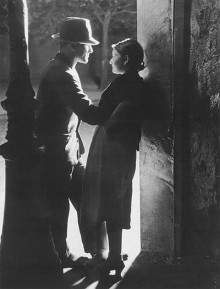
It is 2am at an all night cafe in Pigalle, a seedy red-light quarter of Paris. The lines around her painted lips suggest her voice is the result of a lifetime's dependency upon the Gauloise cigarettes I can see in her cheap plastic handbag. She looks poor but she's drinking a cocktail with all the paraphernalia in it – fruit, mint, twizzle stick, parasol. She was probably beautiful once. Now her hair is growing thin from years of peroxide abuse.
"Of course. They are just notes I make when I have ideas."
"Ah bien sure, cheri," she replies, taking my hand gently, "but what sort of ideas? Ideas for what? Are you a policeman – a detective hunting for a murderer, perhaps? Or do you make movies maybe?"

She smiles as she strokes my hand. Her teeth do not do her any favours.
"I write stories."
"Ooh," she replies, as if with a relish for something mysterious, "detective stories? Des histoire erotique peut etre?"
"Excursions into the lives of others," I reply. I translate it to be sure she has understood.
"Yes I understand," she says. "I have been on many such excursions. I have looked through the windows of so many souls, good and bad. Bad mostly.... Paff, no no it is not true! I have loved many men you see. Women too. They are my constant companions, and yet I remain alone. I have come to prefer it that way. Or perhaps I have no choice – it is my destiny. Tant pis. I share their journey for a while and then we part. It is my life, voila!"
"Why do they leave?" I ask, "Or why do you leave?"
"They die. These days anyway, mostly they die. It is my destiny, and theirs. But they die happy. I no longer have the power to attract young men like you."


She laughs and looks deep into my eyes. Incredible eyes she has. The eyes of a girl.
"So what do you seek in life...I'm sorry, I don't know your name."
"Marielle," she replies. "Enchante."
She performs a kind of childish seated curtsey, which is mor sad than endearing. I tell her my name – except not my real name, of course.
"What are you seeking at this stage of your life, Marielle?"
"The same as always," she says, looking up from her cocktail. "I don't seek wealth, fame or a big house. Just someone who will hold me all night."
"But is that so hard to find?"
"Ah, you would be surprised, cheri!" she laughs. "Men want to jump on your bones and then go. They promise not to – many promise not to. They probably can't help it. Maybe I am hard to love, I suppose? And then the women? There is always a man somewhere who they left behind. They hate them, but when they call they will go."


I thank her for her conversation and go to pay. I try to pay for her drink too but the bearded woman at the counter simply tut-tuts and waves her finger. Despite my desire to close the door gently it closes with a harsh bang. I shudder and get as far as the corner before my conscience gets the better of me. As with her, perhaps destiny drove me back, or a desire to be able to help someone less fortunate than myself. It would cost me nothing to brighten her life just for one night. Arriving at the bar I hesitate before opening the door. Through the condensation on the window, I see her stroking the hand of an elderly gentleman. Her long fingers removing his gloves, the same grey toothed smile. Turning to walk away I catch the eye of the woman at the counter. Again that wagging finger.


If you would like to read the bestselling travel book 'Long Road, Hard Lessons' by Mark Swain, or his collections of short stories (including the prizewinning "Special Treatment"), you can find them on Amazon, Smashwords etc. Click the link:

Please note, you can read an e-book without a Kindle or e-book reader. You can download the Kindle Reader App from Amazon for free, to your Computer, Laptop, Smartphone, tablet or i-Pad. Just google it.

Monday, 8 July 2013

Stories From Real Life

"How Much of the Story is True?"

People often ask me this question. I am told this is because my characters are very vivid – that they are so defined and individual that they simply must be real. I'm told that the situations in my short stories are so out of the ordinary that they are not something a writer could just invent. But this is not true of course.

There is always an element of truth in everything a writer produces. There has to be – we draw our inspiration from what we know in life. One or two of the short stories I have written over the years are very close to the truth – stories where I didn't have to change much from the event and characters that inspired it – but this is not the norm. In my case, a situation arrises – something someone says or does or something I see on the news for example – that sparks my imagination.

A French friend once told me,
"My brother's not that happy in his life. He's married a North African woman with a big family who all live nearby. In their culture they expect the whole extended family to share what they have. It sounds nice but they used to borrow his nice car and it would always come back damaged. It tortured him."
I thought about this brother – a rather obsessional man of habit – and how a man like him might try to resolve this situation. I imagined him arguing with his wife but realising how she would always see it according to her culture – he was being mean. I imagined what he might do to deal with this borrowing expectation – how a man of his nature might develop strategies and adopt strangely complex systems to make it harder for the family to borrow his things, but without demonstrating a lack of generosity. Before long I had weaved a detailed character in my head and a whole set of bizarre behaviours he might adopt. I imagined him with a valuable classic car he had painstakingly saved for as a younger man – his efforts over years to restore it. I imagined him marrying this beautiful exotic creature and then discovering the family culture thing. He would be desperate not to lose her but tortured by the possible damage to his cherished car. He thinks of selling it but can't bear to part with it. He could say it had been stolen perhaps? He begins by saying it's not insured for others to drive, of course, but these are North Africans. Eventually, in a state of mania, he resorts to taking a part (the rotor arm) out of the car so that it won't work. This means he can't drive it either, but it is a price worth paying, he feels.


I wrote down the story and developed it. It seemed like it had legs, as they say. I built up the characters of the man, his wife, her family, the man's work colleagues etc. I described their apartment and the car – it was a Porsche 365 Roadster. The story was set in the UK and the woman became Afro-caribbean. When a few years later the story was published in a book of short stories, I sent a copy to my French friend. Later I asked him how he liked the stories. I waited for him to remark on the character based upon his brother, which he did not. I asked him which of the stories he liked best and he said he loved the one about the guy with the Porsche. I told him this was unsurprising since it was based upon what he had told me about his brother. He was confused. Nothing in the story seemed to him to relate to his brother, he said. I mentioned the car and the cultural issues with his wife's family. He saw the link but insisted it was such a different story that his brother's life was unrecognisable in it.

The above example is typical. Generally it is unlikely that anyone is going to accuse me of making public their closely guarded secrets to my readers. My wife worries about this a lot, I have to say. But the characters and situations are too much changed. They absorb characteristics of other people I have known or heard about. The circumstances and backstory changes. The environment changes and so does the main story – all embellished with things I remember from my past, from films, from television programs and even from other books. Yes, I have a good memory!

You might find it interesting to know, that my French friend told his brother what the man in the story did to avoid having his precious possessions borrowed. His brother tried it out, with some success. I'm very happy to have acted as his therapist in this case.

By the way, for those who are wondering, the story in question is named For The Love of Marsha.  It  is one of the stories in the book, Special Treatment and Other Stories.

The blog about this book and the link to its listing on Amazon is here